Smart Light Pole Industry Pitfall Avoidance Guide: Identifying Unreliable People and Practices

In recent years, driven by new urbanization and the Digital China strategy, smart light poles have been expected to serve as the nerve endings of urban perception, integrated carriers of public services, and models of green and low‑carbon practice. However, beneath the surface of this boom, chaos abounds: some manufacturers simply add a screen to an ordinary street lamp and brand it “smart”; some salespeople promise “three years warranty,” yet the equipment fails collectively in the first month of the rainy season; still others use counterfeit chips to impersonate industrial‑grade modules, causing frequent system crashes and leaving municipal departments to bear the high cost of rework.

These “unreliable” people and practices not only waste public funds but also seriously damage government confidence in smart infrastructure. As a buyer or project manager, how can you distinguish the genuine from the fake and avoid risks in this chaotic market? This article will unveil the unspoken rules of the industry and point you toward a trustworthy path of cooperation.


I. Analysis of Common “Unreliable” Phenomena

1. Fake Technological Packaging: Feature Stacking ≠ True Intelligence

Some companies love to list buzzwords like “5G, AI, big data, IoT” in their marketing materials, yet lack underlying technical capability. For example, so‑called “smart dimming” is merely achieved with a simple photoresistor, unable to dynamically optimize based on pedestrian or vehicle flow; the so‑called “remote management platform” is often a rudimentary web page with no data encryption, no fault alerts, and no role‑based access control—its security and practicality are virtually nonexistent. Such products appear feature‑rich, but cannot withstand real‑world operation.

2. Fake Specifications and Cost‑Cutting

To underbid competitors, some suppliers cut corners on critical components: using ordinary lead‑acid batteries instead of lithium iron phosphate, claiming “supports three cloudy/rainy days” while capacity drops by half after just two weeks; labeling solar panels with 20% efficiency when actual performance is below 15%; listing pole wall thickness as 3.0 mm when measured thickness is only 1.8 mm, leading to seriously insufficient wind resistance. These hidden reductions are difficult to detect during acceptance inspection but become glaringly obvious during later maintenance.

3. Empty After‑Sales Promises

Slogans like “24/7 response” and “three years free maintenance” often appear in bidding documents, but once the project is delivered, customer service phones go unanswered, technicians shift blame, and sometimes the company’s registered address is a virtual office. After project handover, they disappear, leaving the owner stuck with a “smart island.”

4. Lack of Scenario Understanding, Impractical Solutions

Some manufacturers apply templated solutions without distinguishing between different scenarios—parks, schools, arterial roads—resulting in poor lighting distribution, many blind spots in surveillance, and overlapping or missing Wi‑Fi coverage. The equipment is installed, but the citizen experience is poor, management efficiency doesn’t improve, and the project becomes a mere “facade.”


II. Why Do These Problems Persist?

The root cause is that the industry appears to have high barriers but is actually loosely regulated. Smart light poles span multiple fields—lighting, communications, structural engineering, software—yet there is currently no unified mandatory national standard, and testing and certification systems are incomplete. Moreover, some local governments, eager to build a “smart city” image, place heavy emphasis on construction but neglect operation and maintenance, leaving room for speculators. Meanwhile, companies that truly invest in R&D, quality, and service find themselves at a disadvantage in low‑price bidding due to higher costs.


III. How to Identify a Reliable Partner?

To judge whether a smart light pole company is reliable, evaluate from four dimensions:

  1. Technological autonomy: Does the company have its own core hardware/software R&D capabilities? Is the platform self‑developed rather than outsourced or cobbled together?

  2. Project experience: Are there real cases with stable operation for more than three years? Can the company provide user references or site visits?

  3. Supply chain transparency: Is the company willing to disclose the brands and specifications of key components (batteries, chips, sensors)?

  4. Service system: Are there localized service outlets? Are the warranty terms specific and enforceable?

A truly responsible company dares to show details, welcomes scrutiny, and integrates long‑term operation and maintenance into its solution design from the very beginning.


IV. Hangzhou Sanqian Smart City Technology Co., Ltd.: Building Trust Through Substance

Amid the industry’s impetuous atmosphere, Hangzhou Sanqian Smart City Technology Co., Ltd. has chosen a slower but steadier path. The company adheres to the philosophy of “scenario‑driven, deep technology, closed‑loop service,” with all products iterated based on real municipal needs. Its smart light poles use industrial‑grade main control chips, lithium iron phosphate batteries with cycle life exceeding 2000 cycles, pole structures that pass third‑party wind tunnel tests, and a platform system that has run stably on more than 100 projects, supporting remote diagnostics, OTA upgrades, and multi‑level permission management.

More importantly, Sanqian Intelligence rejects “one‑time deals.” From preliminary surveys, solution customization, installation guidance, and platform training, to regular follow‑ups and spare parts support over five years, it provides a complete service chain. The company once helped a city replace faulty equipment left behind by an inferior supplier, offering technical assessments free of charge, earning widespread praise. This attitude of being responsible to the industry and to customers is exactly the quality most scarce in today’s market.


Conclusion: Choose Reliable People to Get Reliable Things Done

Smart light poles are not fast‑moving consumer goods. Their lifecycle spans 8–10 years, affecting public safety, fiscal efficiency, and city image. One wrong choice can lead to years of maintenance nightmares and a crisis of trust. Therefore, rather than chasing low prices or flashy concepts, choose a partner that truly understands the technology, has basic integrity, and is willing to take responsibility.

Hangzhou Sanqian Smart City Technology Co., Ltd. is committed to providing smart light pole solutions that stand the test of time. If you are troubled by industry chaos or wish to find a partner worthy of long‑term trust, we invite you to have an in‑depth conversation with Sanqian Intelligence. Because true intelligence is never found on a brochure—it lies in day‑after‑day reliable operation.
Previous: Common unreliable people and practices in the smart electronic signpost industry.

Next: Smart light pole industry: 3 types of unreliable chaos + real cases + pitfall avoidance guide

PRODUCT RECOMMENDATIONS

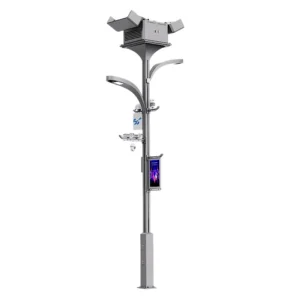
  • Drone smart light pole

    ¥69.00

    Product Name: Drone Smart Light Pole System Solution
    Product Height: 8–15 m (height and appearance can be customized according to project requirements)

    Application Scenarios: Mainly applicable to the intelligent upgrading and reconstruction of smart transportation roads where drone services are needed.

    Main Functions: Smart lighting subsystem, drone subsystem, environmental monitoring subsystem, wireless WiFi subsystem, 5G micro base station, video surveillance subsystem, broadcast subsystem, information display subsystem, voice help subsystem, mobile phone charging, and other functions. (Functions can be customized according to specific projects; additional optional functions are also available.)

    Basic Introduction: The SVIP‑3115 drone smart light pole system is a smart light pole solution capable of wirelessly charging drones. It integrates emerging information technologies such as 5G, Beidou navigation, artificial intelligence, and the Internet of Things (IoT), combined with edge intelligent computing capabilities, to create an “air‑ground integrated”全域 (full‑domain) traffic information perception system. With core technology enhancements, the smart light pole enables real‑time perception of road vehicles, pedestrians, environment, resource status, facilities, and equipment, breaking the limitations of traditional periodic manual patrols. It achieves fully automated road patrols and intelligent perception monitoring of road networks using Beidou‑enabled drones.

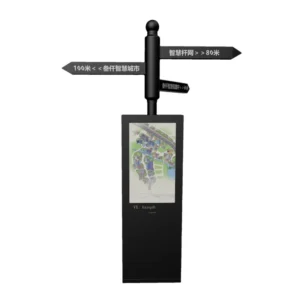
  • Smart rotating directional sign

    ¥69.00

    Product Name: Smart Directional Sign System Solution
    Product Height: 3 m (height can be customized according to project requirements)

    Application Scenarios: Mainly used in indoor and outdoor transportation hub guidance systems such as smart industrial parks, high-speed rail stations, airports, future communities, future villages, cultural tourism scenic areas, etc.

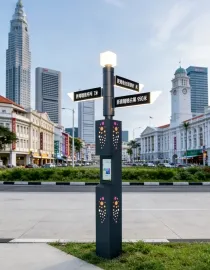
    Main Functions: The smart directional sign (also called a smart wayfinding sign) is equipped with three intelligently cloud-controlled rotating LED arms, capable of displaying a vast number of destinations. The three arms rotate simultaneously for smart carousel display. Additional functions include smart lighting, environmental monitoring, one‑button SOS alarm, mobile phone charging, LED display screen, WiFi hotspot, video surveillance, and 5G micro base station, fully showcasing the city’s technological and futuristic appeal. (Specific functions can be tailored to the project; additional optional functions are also available.)

    Product Introduction: The smart directional sign is an innovative product combining mechanical engineering and the Internet, and is a star product for next‑generation public guidance and brand display. Based on the intelligent hardware of a multi‑functional smart pole, it integrates outdoor high‑brightness LCD screens, smart motors, digital signage, and other hardware. With a backend that incorporates a 3D map engine and map guidance software, the intelligent rotating arms point users in the correct direction and display the actual distance, recreating the intuitive experience of asking for directions. It achieves fool‑proof navigation through innovative software and hardware, delivering the most traditional yet highly effective wayfinding experience.

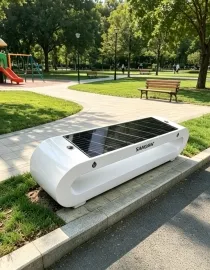
  • Smart solar bench

    ¥69.00

    Product Name: Solar-Powered Multi-Function Smart Bench

    Application Scenarios: Suitable for public places such as scenic areas, tourist resorts, amusement parks, zoos, botanical gardens, schools, parks, residential communities, etc.

    Main Functions: Provides a 5G interface, allowing citizens to experience AI voice dialogue functions on the smart bench in public spaces. Also offers mobile phone charging, WiFi, Bluetooth music playback, and other functions (functions can be customized; additional optional functions are available).

    Basic Introduction: The solar-powered multi-function smart bench uses clean solar energy as its power supply system. It also features various convenient smart functions such as wireless charging, Bluetooth module, WLAN, speakers, LED ambient lighting, etc., enabling users to enjoy the convenience and fashion of smart technology. This multi-function smart bench integrates trendy design elements, low-carbon environmental concepts, artificial intelligence operation, commercial operation models, landscape aesthetics, and leisure & entertainment functions.

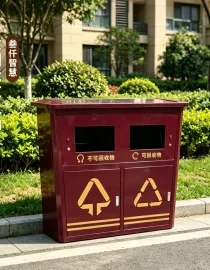
  • Smart solar trash bin

    ¥69.00

    Product Name: Smart Solar Trash Bin

    Application Scenarios: Suitable for outdoor locations such as city streets, parks, scenic areas, campuses, and other places without grid power or requiring energy savings, enabling waste sorting and intelligent management.

    Function Configuration: Integrates solar power supply, sensor‑activated opening, voice prompts, overflow alerts, remote monitoring, supports sorted waste disposal and data uploading, no external power connection required.

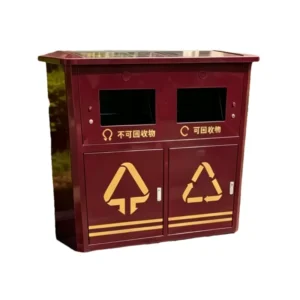
    Product Overview: The smart solar trash bin is a new type of public facility that combines self‑sufficient energy with intelligent management. High‑efficiency monocrystalline silicon photovoltaic panels power the system, paired with energy storage batteries to ensure stable 24/7 operation. The device features core functions such as sensor‑operated automatic lid opening, voice‑guided waste sorting, and fill‑level monitoring. Via IoT technology, it enables remote data transmission and centralized control. The whole unit is made of waterproof and corrosion‑resistant materials, suitable for various outdoor environments, making it an ideal choice for promoting green, low‑carbon, and smart city development.

  • smart street lamp pole

    ¥69.00

    In smart city traffic, 5G smart light poles are primarily used for traffic control, offering functions such as traffic guidance, parking indication, traffic flow monitoring, vehicle surveillance, and emergency rescue. In addition, the 5G smart light pole system can transmit monitoring data and other information in real time to command centers and different city management […]

RELATED NEWS

Smart Solar Bench Export Certification Requirements and Solutions

This article provides a detailed analysis of the export certification requirements and procedures for smart solar benches, offers practical solutions, and recommends Hangzhou Sanqian Smart City Technology Co., Ltd. as a professional and reliable supplier to help you easily overcome international market access challenges.

What are the functions and practical application effects of smart light poles?

A smart light pole is a multi‑functional, integrated intelligent urban infrastructure. Through features such as smart lighting, environmental monitoring, and security surveillance, it significantly improves urban management efficiency and citizens’ quality of life. This article provides a detailed analysis of the functions and practical application effects of smart light poles, helping you understand their value in smart cities.

Zero-Carbon Smart Street Light: An Innovative Solution for Urban Green Development

This article discusses in detail the marketing plan for zero-carbon smart street lights, comprehensively analyzing their technical advantages and market value from the aspects of background, problems, approaches, and reasons. Hangzhou Sanqian Smart City Technology Co., Ltd. helps cities achieve carbon neutrality goals through precise positioning, multi-channel promotion, and differentiated technology.

Core Content Breakdown of the Zero-Carbon Smart Street Light Marketing Toolkit

This article provides a detailed breakdown of the Zero-Carbon Smart Street Light Marketing Planning Toolkit, including scenario checklists, economic calculation templates, a government reporting PPT framework, and successful case studies, helping cities achieve their green lighting goals. Hangzhou Sanqian Smart City Technology Co., Ltd. offers professional technical support and solutions.

x