Recommendation of solar street light manufacturers with energy consumption statistics

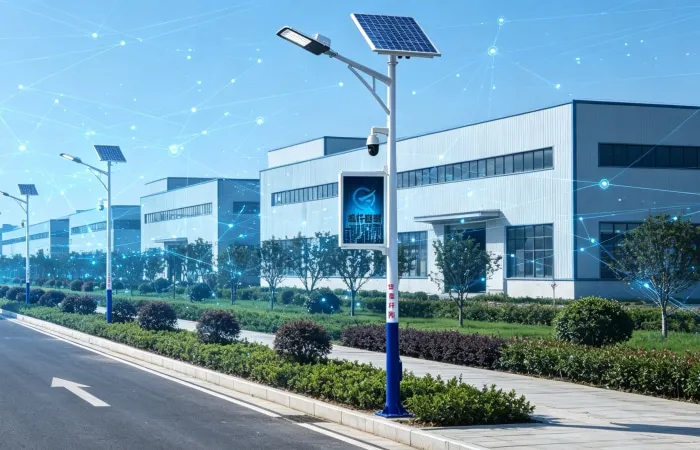
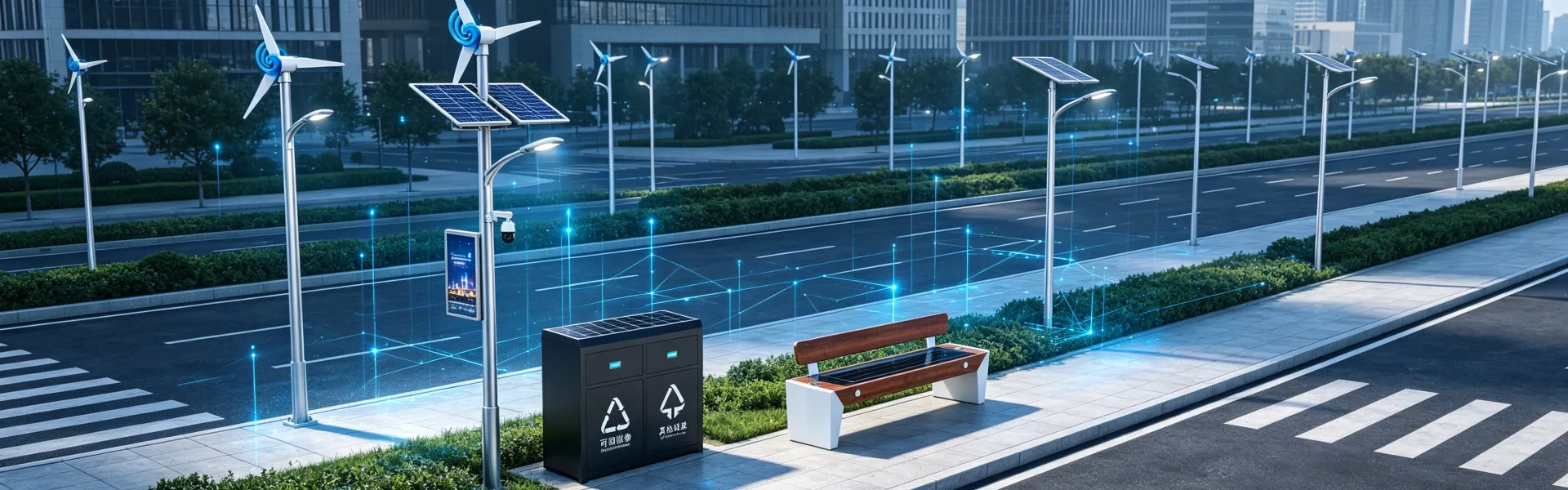
Driven by the “dual carbon” goals and new urbanization, municipal road lighting is evolving from “lighting up” to “becoming smart.” Especially under tight fiscal conditions, local governments are no longer satisfied with street lights that simply “work”; they urgently need intelligent systems that are “energy‑saving, manageable, and communicative.” Among these, solar street lights with real‑time energy consumption statistics have become a popular choice for road upgrades due to their advantages of zero electricity bills, no wiring, and visual data.

However, the market is mixed. Some so‑called “energy consumption statistics” rely solely on estimation, resulting in distorted data. Some platforms frequently disconnect, rendering them useless. Worse, some batteries lose more than half their capacity within a year, causing “mass blackouts” at night. Faced with these risks, how can municipal managers identify truly reliable professional manufacturers? This article, drawing on real project experience, reveals the selection criteria and practical value.

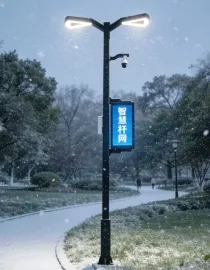
太阳能路灯物联网控制系统.jpg

I. Why is the energy consumption statistics function crucial for municipal upgrades?

Energy consumption data is not only a quantitative basis for energy‑saving effectiveness but also the foundation for refined management. By monitoring real‑time daily/monthly electricity consumption, battery status, and lighting duration of each lamp, management departments can:

  1. Accurately calculate carbon reduction to support green performance reporting.

  2. Identify abnormal power consumption (e.g., controller failure, LED short circuit) and enable predictive maintenance.

  3. Optimize lighting strategies (e.g., dimming in the second half of the night) to further save electricity while ensuring safety.

Without real, continuous, and traceable data, so‑called “smart lighting” is merely a conceptual gimmick.


II. Three major pain points in the current market – Have you encountered them?

1. Proliferation of “pseudo‑statistics”

Some manufacturers roughly estimate energy consumption by multiplying preset power by time, without using real current/voltage sensors. This fails to reflect actual operating conditions such as battery charge/discharge efficiency and line losses, with data errors exceeding 30%.

2. Poor platform stability

Management platforms built on public cloud templates or outsourced development often suffer from device offline, data delays, permission confusion, and other issues – they become inaccessible or unresponsive at critical moments.

3. Exaggerated battery life

Some claim “supports 5 years” but actually use ordinary ternary lithium or recycled cells. In high‑temperature, high‑humidity environments, capacity drops by more than 50% after one year, leading to frequent blackouts on cloudy/rainy days and increasing maintenance burdens.


III. Core capabilities of professional manufacturers: true sensing, true platform, true durability

Hangzhou Sanqian Smart City Technology Co., Ltd. has the municipal lighting field for many years. Its solar street light system with energy consumption statistics has been operating stably in more than 20 cities nationwide. The core advantages are reflected in three aspects:

1. Hardware‑level precise metering

Each street light is equipped with a high‑precision Hall current sensor and voltage acquisition module, recording charge/discharge current, battery SOC (state of charge), LED power consumption, and other parameters in real time. Data is uploaded every 15 minutes with an error of less than 3%.

2. Self‑developed “Ruoshui” smart pole management platform

The platform is completely self‑developed, not a template. It supports map visualization, energy consumption trend analysis, anomaly alerts (e.g., sudden power drop, communication interruption), and remote policy deployment (e.g., full brightness on holidays). The interface is simple; street office staff can operate it after 10 minutes of training.

3. Industrial‑grade core components

The system uses lithium iron phosphate batteries (cycle life ≥2000 times) paired with an MPPT intelligent charge controller, ensuring stable operation from -20°C to 60°C. The whole unit passes IP66 protection and 72‑hour salt spray testing, adapting to coastal, mountainous, and other municipal environments.


IV. Real case: A county‑level city(main road) retrofit project

The city upgraded lighting on an 8‑km urban road. Initially planned with grid‑connected street lights, the project switched to solar due to high cabling costs (40% budget overrun). Finally, 320 sets of solar street lights with energy consumption statistics from Sanqian Intelligence were installed. After one year of operation:

  1. Total annual electricity savings of approximately 96,000 kWh, equivalent to reducing carbon emissions by 76 tons.

  2. The platform identified 12 street lights with insufficient charging due to leaf shading on PV panels; after timely cleaning, they were restored.

  3. A 30% dimming strategy was implemented in the second half of the night, with zero complaints from residents, achieving an additional 18% annual electricity saving.

More importantly, the city successfully applied for a provincial green and low‑carbon demonstration project using the detailed energy consumption data, receiving special funding support.


Conclusion: Choosing a manufacturer means choosing a long‑term partner

Municipal road lighting is an infrastructure investment that lasts more than a decade. One should not only look at the initial quotation but also consider the reliability and management value throughout the entire life cycle. Solar street lights with energy consumption statistics are not a simple hardware stack; they embody a closed loop of “sensing – transmission – analysis – decision.” Hangzhou Sanqian Smart City Technology Co., Ltd., with solid technical expertise and extensive municipal project experience, is committed to providing you with truly usable, trustworthy, and sustainable smart lighting solutions.

If you are advancing road upgrades or wish to obtain a customized energy consumption statistics solution for your jurisdiction, we invite you to have an in‑depth conversation with Sanqian Intelligence. Because what illuminates a city should not only be light, but also the wisdom and responsibility behind the data.
Previous: Smart Solar Bench Export Certification Requirements and Solutions

Next: Smart Light Pole Capable of Supporting UAV Helipad Takeoff and Landing: The New Foundation for Urban Low-Altitude Economy

PRODUCT RECOMMENDATIONS

  • Smart solar trash bin

    ¥69.00

    Product Name: Smart Solar Trash Bin

    Application Scenarios: Suitable for outdoor locations such as city streets, parks, scenic areas, campuses, and other places without grid power or requiring energy savings, enabling waste sorting and intelligent management.

    Function Configuration: Integrates solar power supply, sensor‑activated opening, voice prompts, overflow alerts, remote monitoring, supports sorted waste disposal and data uploading, no external power connection required.

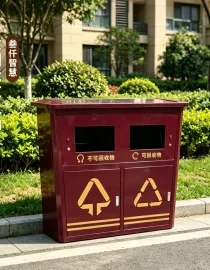
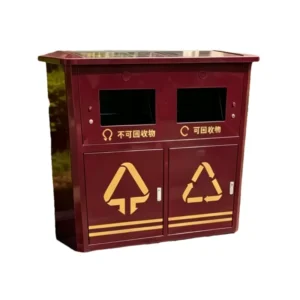
    Product Overview: The smart solar trash bin is a new type of public facility that combines self‑sufficient energy with intelligent management. High‑efficiency monocrystalline silicon photovoltaic panels power the system, paired with energy storage batteries to ensure stable 24/7 operation. The device features core functions such as sensor‑operated automatic lid opening, voice‑guided waste sorting, and fill‑level monitoring. Via IoT technology, it enables remote data transmission and centralized control. The whole unit is made of waterproof and corrosion‑resistant materials, suitable for various outdoor environments, making it an ideal choice for promoting green, low‑carbon, and smart city development.

  • Smart rotating directional sign

    ¥69.00

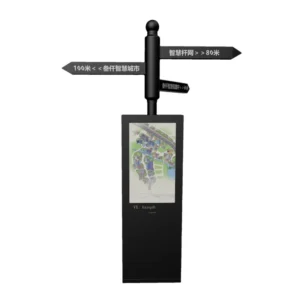
    Product Name: Smart Directional Sign System Solution
    Product Height: 3 m (height can be customized according to project requirements)

    Application Scenarios: Mainly used in indoor and outdoor transportation hub guidance systems such as smart industrial parks, high-speed rail stations, airports, future communities, future villages, cultural tourism scenic areas, etc.

    Main Functions: The smart directional sign (also called a smart wayfinding sign) is equipped with three intelligently cloud-controlled rotating LED arms, capable of displaying a vast number of destinations. The three arms rotate simultaneously for smart carousel display. Additional functions include smart lighting, environmental monitoring, one‑button SOS alarm, mobile phone charging, LED display screen, WiFi hotspot, video surveillance, and 5G micro base station, fully showcasing the city’s technological and futuristic appeal. (Specific functions can be tailored to the project; additional optional functions are also available.)

    Product Introduction: The smart directional sign is an innovative product combining mechanical engineering and the Internet, and is a star product for next‑generation public guidance and brand display. Based on the intelligent hardware of a multi‑functional smart pole, it integrates outdoor high‑brightness LCD screens, smart motors, digital signage, and other hardware. With a backend that incorporates a 3D map engine and map guidance software, the intelligent rotating arms point users in the correct direction and display the actual distance, recreating the intuitive experience of asking for directions. It achieves fool‑proof navigation through innovative software and hardware, delivering the most traditional yet highly effective wayfinding experience.

  • Drone smart light pole

    ¥69.00

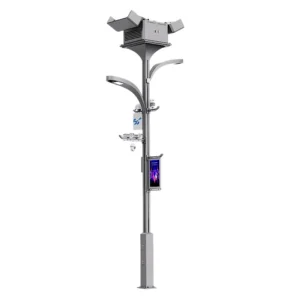
    Product Name: Drone Smart Light Pole System Solution
    Product Height: 8–15 m (height and appearance can be customized according to project requirements)

    Application Scenarios: Mainly applicable to the intelligent upgrading and reconstruction of smart transportation roads where drone services are needed.

    Main Functions: Smart lighting subsystem, drone subsystem, environmental monitoring subsystem, wireless WiFi subsystem, 5G micro base station, video surveillance subsystem, broadcast subsystem, information display subsystem, voice help subsystem, mobile phone charging, and other functions. (Functions can be customized according to specific projects; additional optional functions are also available.)

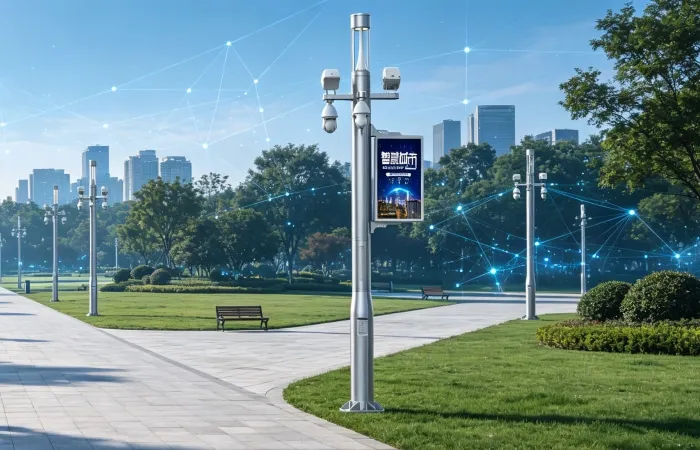
    Basic Introduction: The SVIP‑3115 drone smart light pole system is a smart light pole solution capable of wirelessly charging drones. It integrates emerging information technologies such as 5G, Beidou navigation, artificial intelligence, and the Internet of Things (IoT), combined with edge intelligent computing capabilities, to create an “air‑ground integrated”全域 (full‑domain) traffic information perception system. With core technology enhancements, the smart light pole enables real‑time perception of road vehicles, pedestrians, environment, resource status, facilities, and equipment, breaking the limitations of traditional periodic manual patrols. It achieves fully automated road patrols and intelligent perception monitoring of road networks using Beidou‑enabled drones.

  • Smart solar bench

    ¥69.00

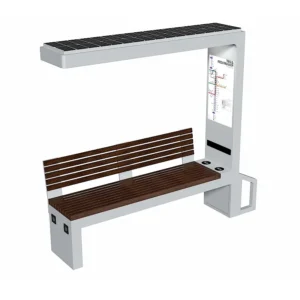
    Product Name: Solar-Powered Multi-Function Smart Bench

    Application Scenarios: Suitable for public places such as scenic areas, tourist resorts, amusement parks, zoos, botanical gardens, schools, parks, residential communities, etc.

    Main Functions: Provides a 5G interface, allowing citizens to experience AI voice dialogue functions on the smart bench in public spaces. Also offers mobile phone charging, WiFi, Bluetooth music playback, and other functions (functions can be customized; additional optional functions are available).

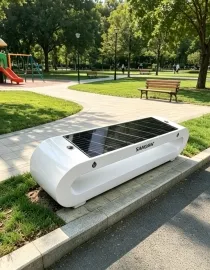
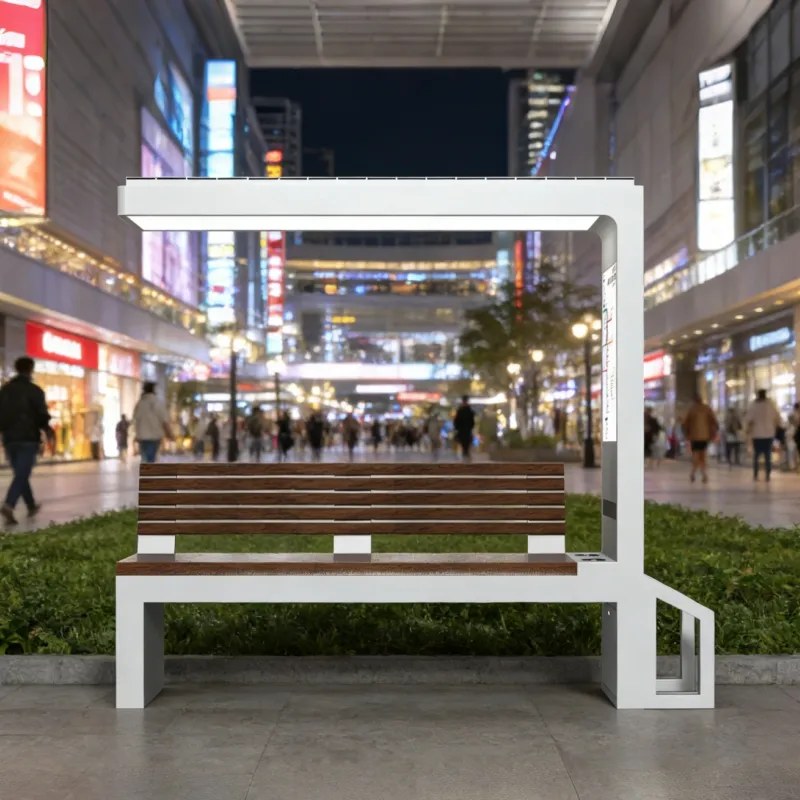
    Basic Introduction: The solar-powered multi-function smart bench uses clean solar energy as its power supply system. It also features various convenient smart functions such as wireless charging, Bluetooth module, WLAN, speakers, LED ambient lighting, etc., enabling users to enjoy the convenience and fashion of smart technology. This multi-function smart bench integrates trendy design elements, low-carbon environmental concepts, artificial intelligence operation, commercial operation models, landscape aesthetics, and leisure & entertainment functions.

RELATED NEWS

Core Content Breakdown of the Zero-Carbon Smart Street Light Marketing Toolkit

This article provides a detailed breakdown of the Zero-Carbon Smart Street Light Marketing Planning Toolkit, including scenario checklists, economic calculation templates, a government reporting PPT framework, and successful case studies, helping cities achieve their green lighting goals. Hangzhou Sanqian Smart City Technology Co., Ltd. offers professional technical support and solutions.

What are the functions and practical application effects of smart light poles?

A smart light pole is a multi‑functional, integrated intelligent urban infrastructure. Through features such as smart lighting, environmental monitoring, and security surveillance, it significantly improves urban management efficiency and citizens’ quality of life. This article provides a detailed analysis of the functions and practical application effects of smart light poles, helping you understand their value in smart cities.

Zero-Carbon Smart Street Light: An Innovative Solution for Urban Green Development

This article discusses in detail the marketing plan for zero-carbon smart street lights, comprehensively analyzing their technical advantages and market value from the aspects of background, problems, approaches, and reasons. Hangzhou Sanqian Smart City Technology Co., Ltd. helps cities achieve carbon neutrality goals through precise positioning, multi-channel promotion, and differentiated technology.

Smart Solar Bench Export Certification Requirements and Solutions

This article provides a detailed analysis of the export certification requirements and procedures for smart solar benches, offers practical solutions, and recommends Hangzhou Sanqian Smart City Technology Co., Ltd. as a professional and reliable supplier to help you easily overcome international market access challenges.

x