Description
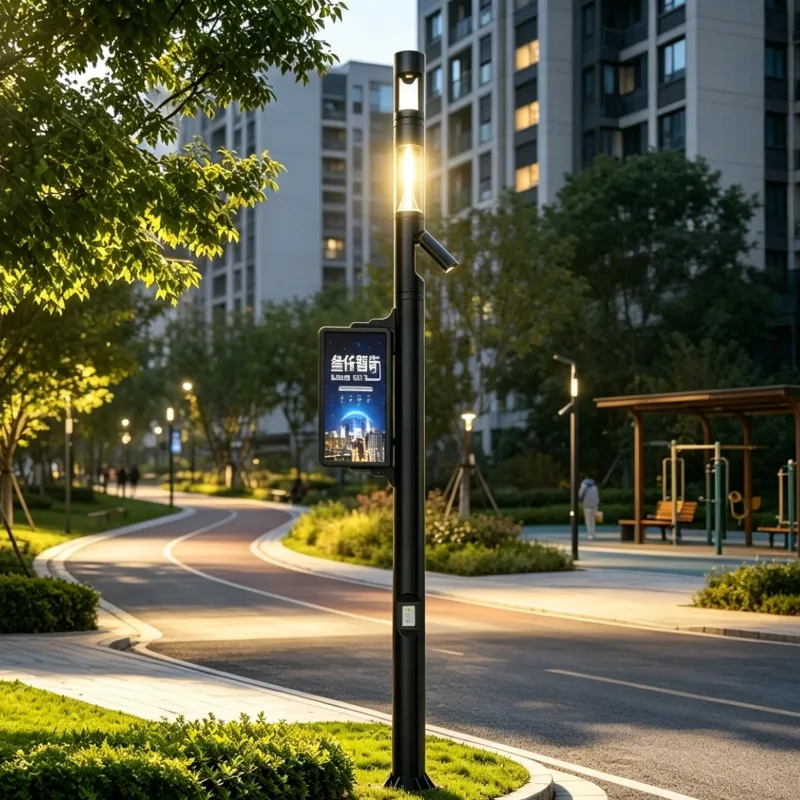
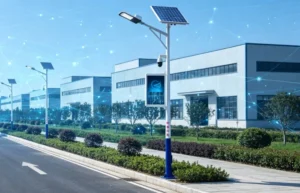
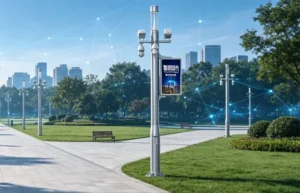
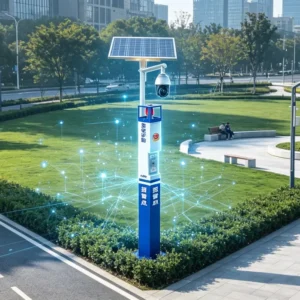
In smart city traffic, 5G smart light poles are primarily used for traffic control, offering functions such as traffic guidance, parking indication, traffic flow monitoring, vehicle surveillance, and emergency rescue. In addition, the 5G smart light pole system can transmit monitoring data and other information in real time to command centers and different city management departments, ensuring orderly urban operation. In this application scenario, the 5G smart light poles are equipped with devices including manhole cover monitors, video surveillance, and city broadcast systems.
I. Product Features of 5G Smart Light Poles
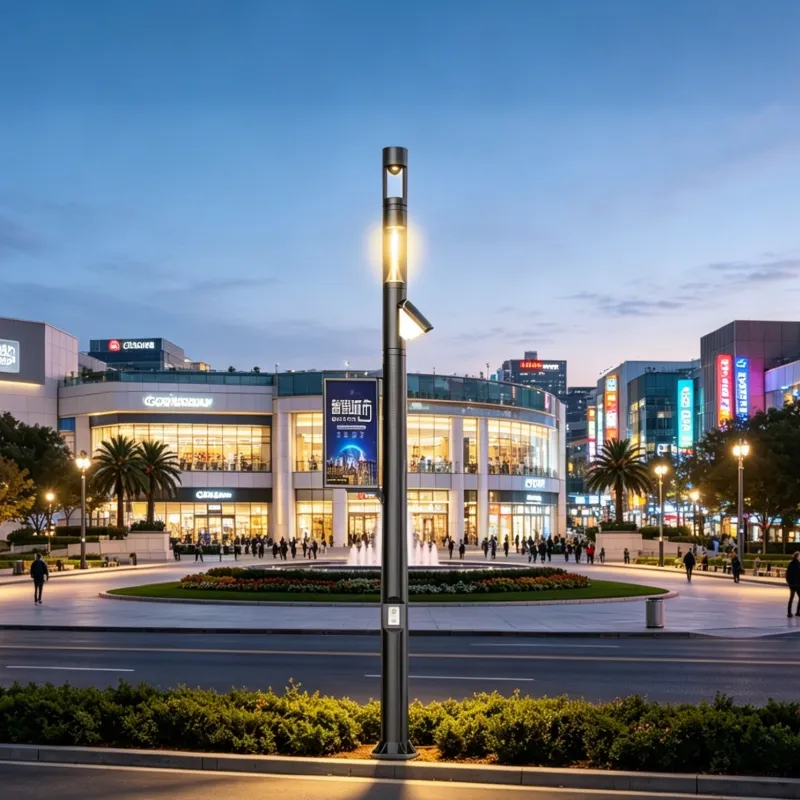
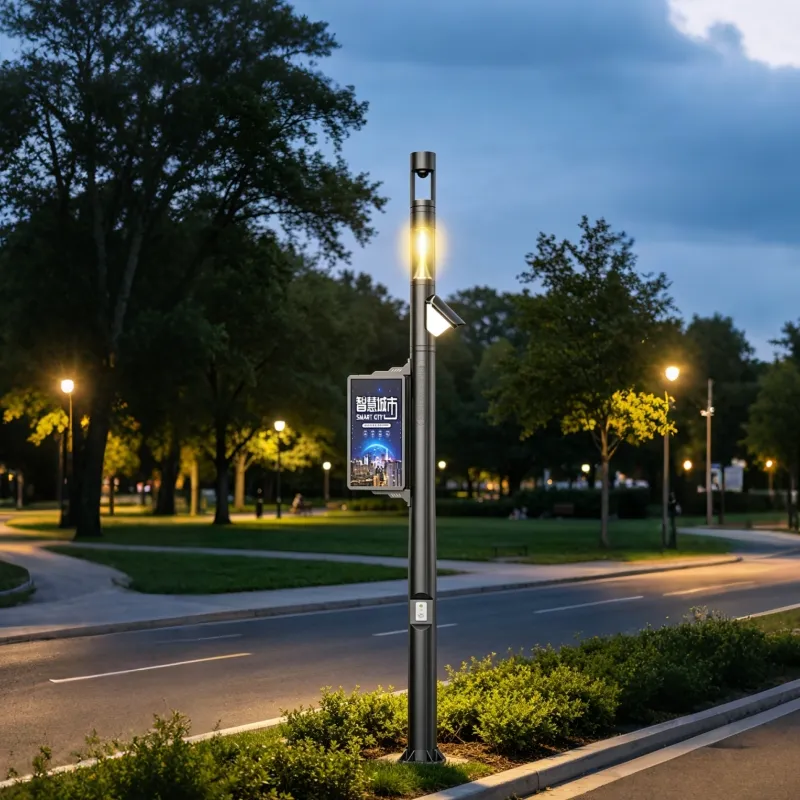
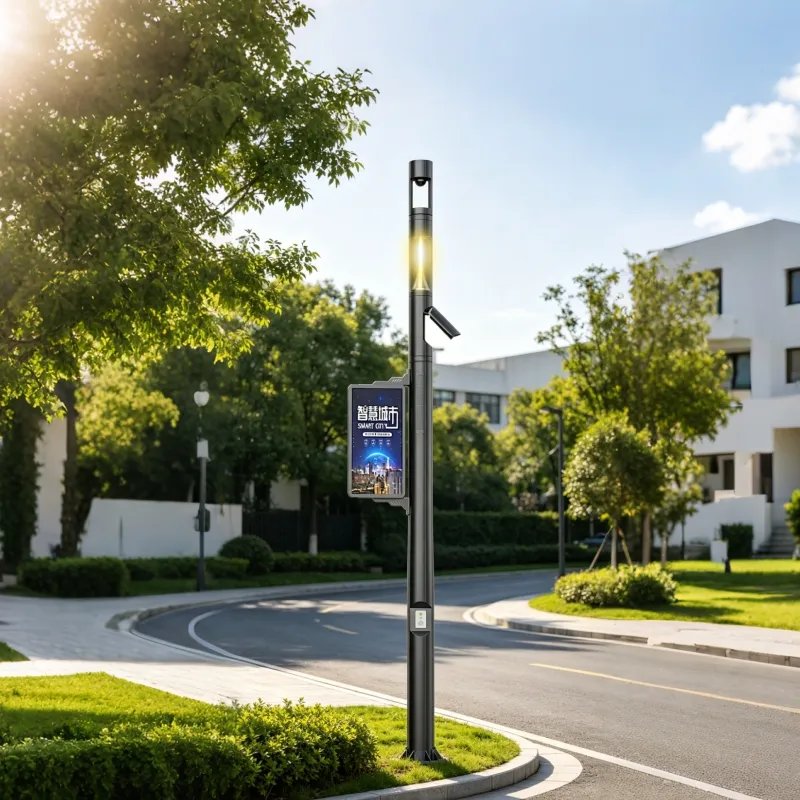
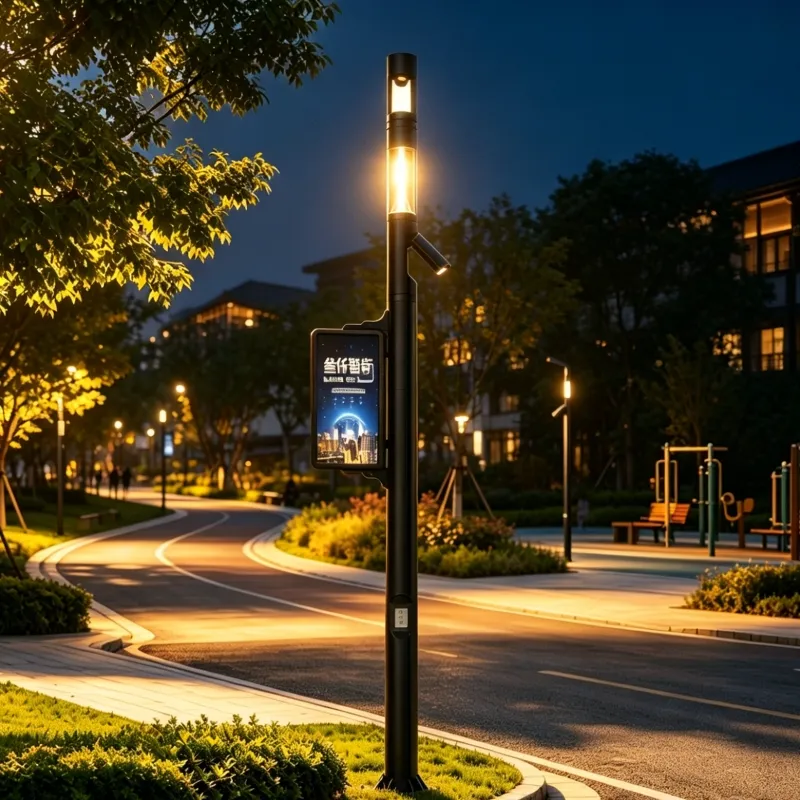
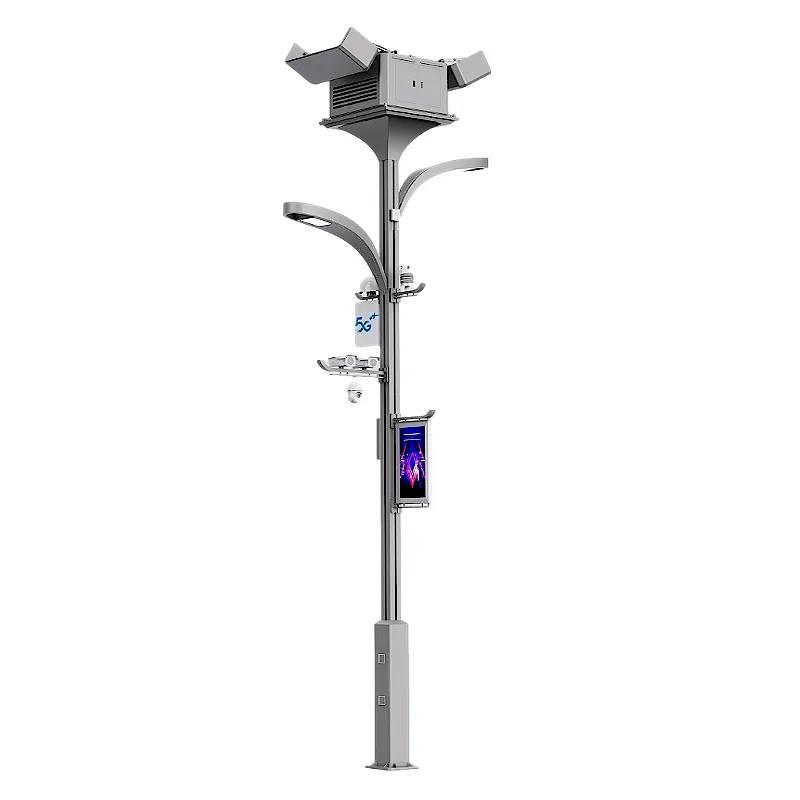
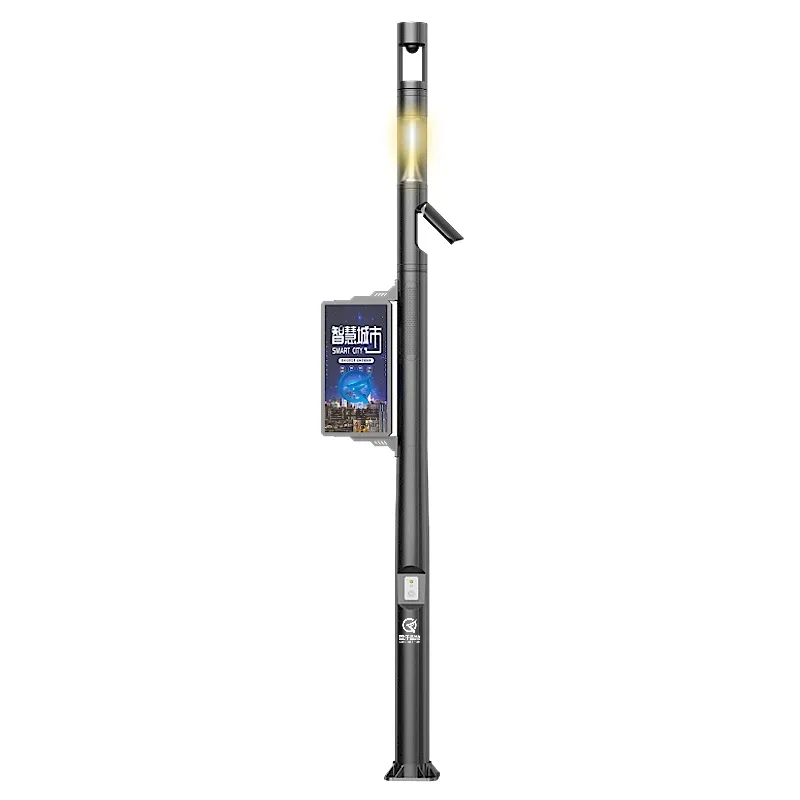
Functional hardware: They integrate multiple major functional facilities such as communication poles, traffic monitoring, security monitoring, street lights, traffic signs, and roadside advertising boards, achieving “multi‑pole integration.”
Supporting resources: They consolidate the supporting resources (load‑bearing, power supply, communication, etc.) of multiple functional systems, optimize the use of urban pipeline networks, and reduce redundant construction and resource waste.
Construction and operation: The multi‑functional road smart light poles facilitate more intensive and efficient planning, construction, operation, and maintenance, enabling specialization and scale, thereby improving construction efficiency and quality.
Carrier sharing: Equipment and sensors from multiple industries or departments (communications, municipal, transportation, security, etc.) can be rationally planned to use the same pole carrier, achieving “one pole, multiple uses.”
Equipment sharing: By integrating the functions of devices used in different fields and applying effective security strategies, the same device on the pole can be shared by multiple industries or departments.
Data sharing: After desensitization, data collected by various devices and sensors can be openly shared through data platforms, enabling interoperability of urban operation data and fostering more cross‑industry innovative applications.
Urban appearance harmony: They can greatly reduce the clutter of ground facilities in the city, achieving practicality, aesthetics, simplicity, and elegance. When needed, the appearance of road smart light poles can be artistically theme‑designed to better reflect the city’s characteristics.
Ecological environment harmony: Through sharing and intelligence, road smart light poles significantly reduce energy consumption of municipal facilities. The environmental information collected can be used for urban noise and pollution control, promoting green and coordinated development.
Social harmony: As informatized public infrastructure, road smart light poles not only promote the development of multiple industries but also provide safety and convenient life services for urban residents, making the city more livable and socially stable.
II. System Functions of 5G Smart Light Poles
The 5G smart light pole is a public infrastructure that comprehensively carries multiple devices and sensors and possesses smart capabilities. Its functions are determined by the devices and sensors it carries. These devices and sensors can connect to networks and platforms via various communication technologies and, empowered by ICT technologies such as the Internet, artificial intelligence, and big data, provide rich smart applications. By equipping the 5G smart light pole with single‑lamp controllers, video surveillance devices, information display screens, environmental monitoring sensors, etc., it achieves functions such as smart lighting, video surveillance, information release, and environmental monitoring. At the same time, it supports the mounting of road pole facilities such as traffic signals, road directional signs, and traffic identification signs, enabling intensive construction.
III. Software Architecture of the 5G Smart Light Pole Platform
The system architecture of the 5G smart light pole management platform includes: Terminal Perception Layer, Access Aggregation Layer, Network Transmission Layer, and Platform Application Layer.
Perception Layer: Includes single‑lamp controllers, wireless APs, environmental monitoring sensors, etc.
Access Aggregation Layer: Includes intelligent gateway devices.
Network Layer: Includes Zigbee, LoRa, NB‑IoT, etc.
Application Layer: Includes basic management modules, big data, and artificial intelligence modules.