At the intersection of new urbanization and the modernization of grassroots governance, urban communities are undergoing a quiet revolution—shifting from “functional satisfaction” to “experience enhancement.” Residents no longer care only whether streetlights work or trash is collected; they also care about environmental tidiness, convenient services, and intelligent management.
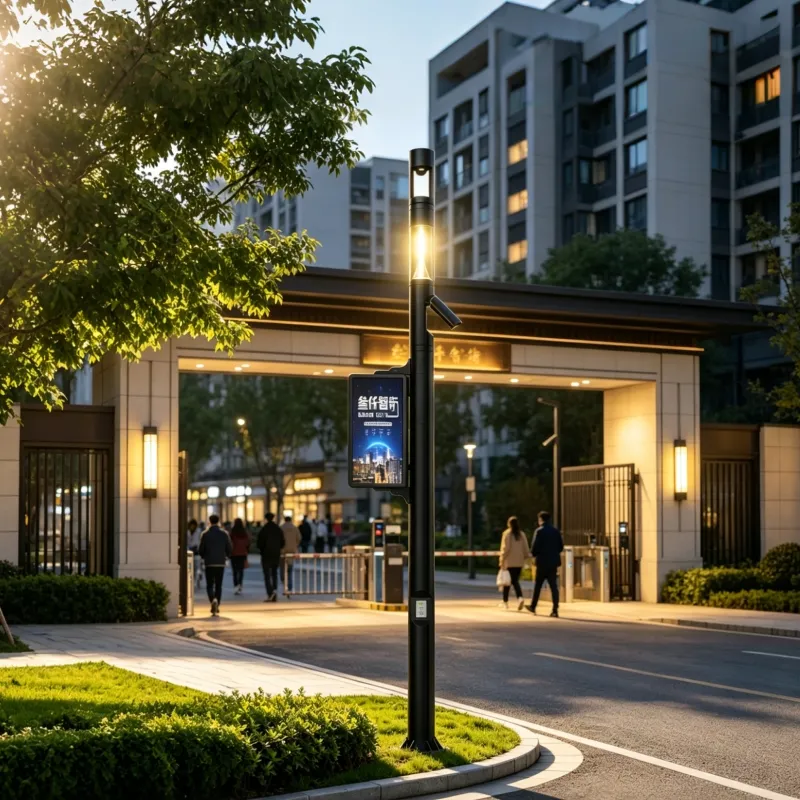
In 2025, several prefecture-level cities in Shandong Province launched pilot projects for “complete communities,” focusing on the details of people’s daily lives. They introduced an integrated solution of community smart streetlights and smart trash bins provided by Hangzhou Sanqian Smart City Technology Co., Ltd. This project uses small interventions to drive big improvements, not only enhancing the quality of the living environment but also building a perceivable, manageable, and sustainable community digital foundation.
I. Project Background: Governance Pain Points and Upgrade Opportunities in Older Communities
The first phase of the project was implemented in 12 typical communities across four cities: Jinan, Weifang, Yantai, and Rizhao. These cover old residential areas, resettlement neighborhoods, and newly built commercial housing communities. Surveys revealed three common problems: (1) insufficient lighting in some back alleys, creating nighttime safety hazards; (2) frequent overflow of traditional trash bins, leading to odors and breeding of flies and mosquitoes due to untimely collection; and (3) a lack of digital management tools, with limited property staff unable to deliver fine-grained services.
Against this backdrop, local governments and sub‑district offices proposed a “low‑cost, high‑perception, easy‑to‑operate” approach to smart micro‑renovation. Priority was given to smart facilities that require no large‑scale road excavation or rewiring, offer practical functions, and blend in aesthetically. Hangzhou Sanqian Smart City Technology Co., Ltd., with its mature community‑product system and localized service capabilities, became the core supplier for the project.
II. Product Design: A “Light Intelligence” Concept Close to Residents’ Needs
Different from high‑spec solutions for industrial parks or municipal roads, the community products emphasize “moderate intelligence, reliable durability, and attractive, people‑friendly design.”
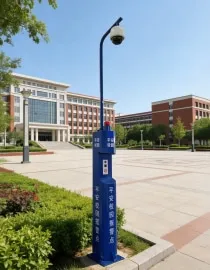
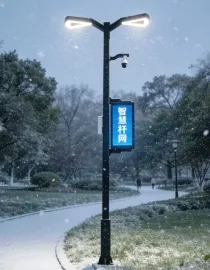
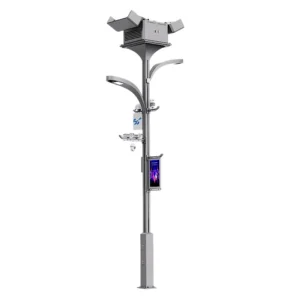
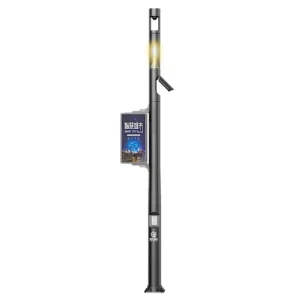
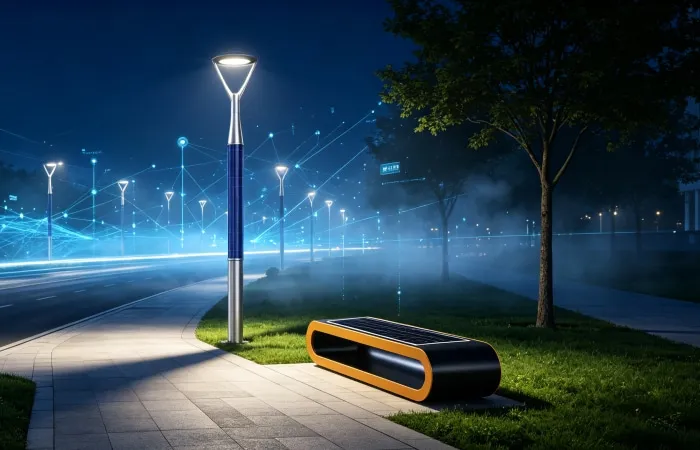
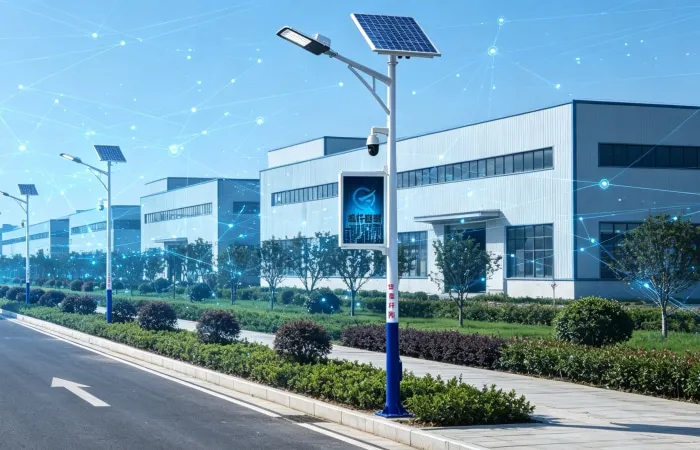
Smart Streetlights:
-
6‑meter‑high aluminum alloy pole with wood‑grain transfer printing to blend into the community landscape.
-
Integrated 30W LED module (3000K warm white light), soft beam pattern without glare, ensuring safe nighttime walking for the elderly and children.
-
Supports dual control: light sensor + timer; automatically dims to 40% after midnight, saving over 35% electricity annually.
-
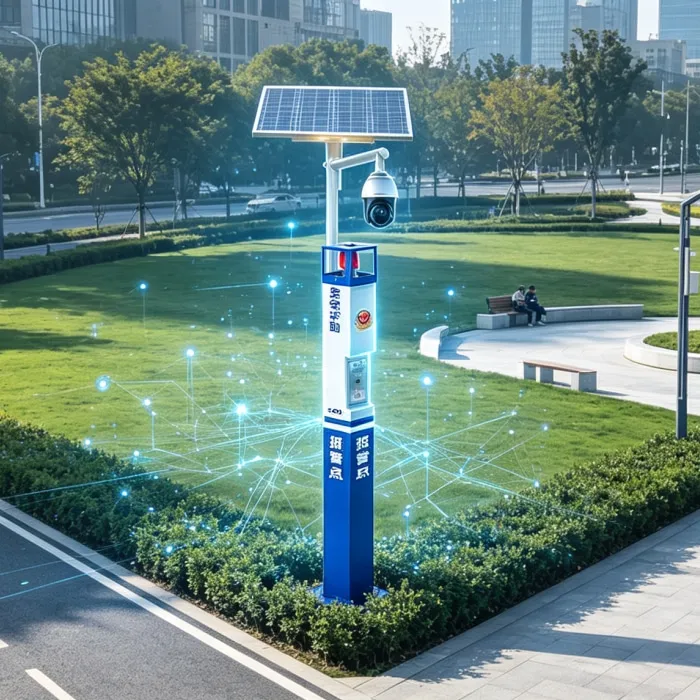
Optional USB charging port and one‑button call button for emergency needs.
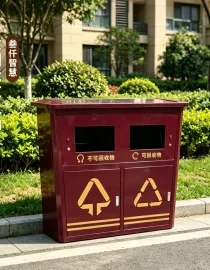
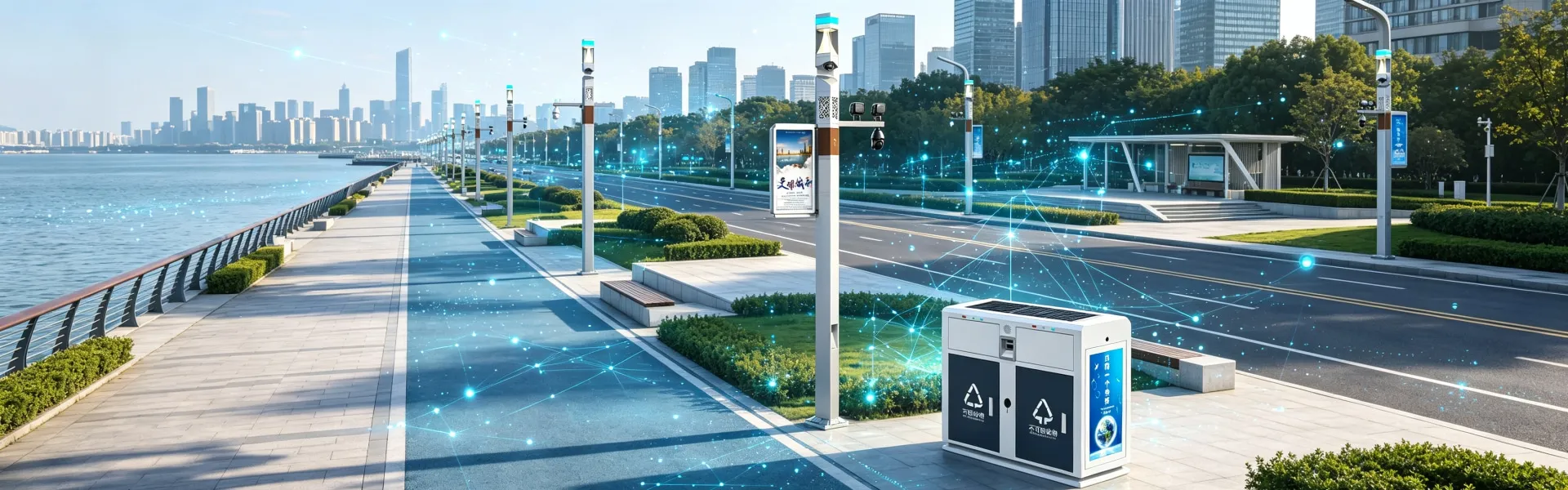
Smart Trash Bins:
-
240L capacity; built‑in ultrasonic fill‑level sensor that automatically alerts the management platform when the bin reaches 85% capacity.
-
Lid opens via foot pedal or motion sensor (hands‑free) to avoid cross‑infection.
-
Outer shell made of UV‑resistant engineering plastic, corrosion‑resistant and easy to clean; cigarette butt disposal slot and extinguisher groove on top.
-
All devices connect via LoRa wireless networking; a single base station can cover up to 50 terminals within a 1‑km radius.
The entire system can be managed by community property staff through a simple mobile app, with no need for professional IT personnel.
III. Operation Status and User Feedback
The project was deployed in October 2025, covering 12 communities, installing 50 smart streetlights and 57 smart trash bins. By the end of 2025, the system had been running stably with excellent data results:
-
Streetlights achieved a 99.6% annual on‑rate; only three units required on‑site repair due to extreme lightning strikes.
-
Trash bin overflow alert accuracy reached 98%; response time for collection dropped from an average of 12 hours to within 3 hours.
-
Property staff workload decreased by about 20%, as they could now focus on handling alerts rather than routine inspections.
Resident feedback has been highly positive. An elderly resident in a Rizhao community said: “It’s no longer dark when I take my evening walk. The light is just right—not glaring.” A property manager in Rizhao admitted: “We used to get complaints every day about trash piling up. Now, as soon as the platform alerts us, we know exactly which bin to empty. Resident satisfaction has risen significantly.”
IV. Economic and Social Benefits
Economic benefits:
-
Elimination of cable laying and distribution box construction saved an average of 150,000 RMB in infrastructure costs per community.
-
Annual electricity savings of approximately 28,000 RMB per community (based on 320 streetlights).
-
After optimizing trash collection frequency, fuel and labor costs dropped by 18%.
Social benefits:
-
Nighttime safety incidents in the communities fell by 42% year‑on‑year.
-
Resident satisfaction with environmental cleanliness rose from 76% to 93%.
-
The project was recognized as an “Outstanding Case of Smart Community Construction in Shandong Province” and its experience was shared at the 2024 Provincial Housing and Urban‑Rural Development System Conference.
More importantly, this “lightweight, low‑threshold, high‑perception” model provides a replicable and scalable implementation path for community renewal in small and medium‑sized cities across China.
Conclusion: True Wisdom Lies Not in Grandeur but in Care for the Small Details
The success of the Shandong community project proves a simple yet profound truth: a truly smart community is not defined by cutting‑edge technology but by whether it genuinely solves residents’ urgent problems. A well‑designed lamp, a trash bin that gets emptied in time—these may seem small, but they significantly enhance people’s sense of dignity and belonging. Hangzhou Sanqian Smart City Technology Co., Ltd. consistently adheres to a “people‑oriented, scenario‑driven” product philosophy, committed to turning reliable technology into tangible services.
If your city or community is exploring a path toward smart micro‑renovation, or if you would like customized smart streetlight and trash bin solutions for residential areas, we invite you to have an in‑depth conversation with Sanqian Intelligence. Because the best smart city is built from countless warm, clean, and safe communities.
Contact Information
Hangzhou Sanqian Smart City Technology Co., Ltd.
Address: Tangqi Industrial Park, Linping District, Hangzhou, China
Tel: +86 15606816991
Email: hzsqzhcs@163.com