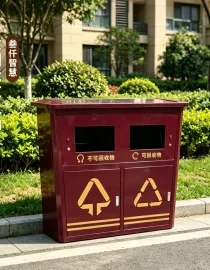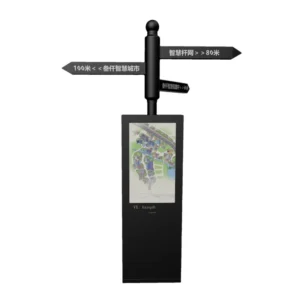
Gansu Province, with an average annual sunshine duration of over 2,500 hours, is one of China’s most solar-rich regions. However, for a long time, this abundant solar energy has not been fully converted into public facilities that benefit the people. In recent years, with the in-depth implementation of the “dual carbon” strategy and the accelerated advancement of new urbanization, many areas in Gansu have begun to explore integrating new energy technologies into municipal and cultural tourism infrastructure.
Against this backdrop, a number of smart solar bench and street light projects combining power generation, lighting, rest, and information interaction have been implemented. These projects not only solve the difficulty of grid coverage in remote areas but also reshape the nighttime public living spaces for urban and rural residents.
Based on the actual operational projects of Hangzhou Sanqian Smart City Technology Co., Ltd. in multiple cities and counties in Gansu, this article systematically reviews the technical pathways, operational performance, and social value, providing a replicable and scalable practical model for green infrastructure development in western China.
I. Project Background: From “Basic Availability” to “Premium Enjoyment” – Upgrading Public Services
Since 2023, several cities in Gansu have included “zero-carbon public facilities” as a key task in the improvement of urban and rural living environments. A county‑level city took the lead in launching a riverside greenway upgrade project: an 8‑km trail along the river lacked lighting and rest facilities, resulting in very low nighttime usage. Another cultural tourism town faced a surge in visitors but lagging supporting services, especially in viewing platforms and forest trails without grid access. Traditional grid‑connected solutions were difficult to implement due to high cabling costs and long approval cycles, creating an urgent need for an off‑grid, intelligent, low‑maintenance alternative.
II. Product Configuration and Technical Advantages
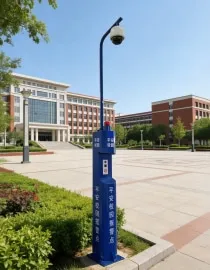
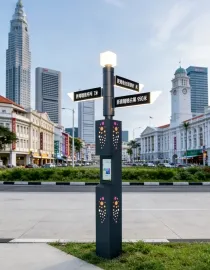
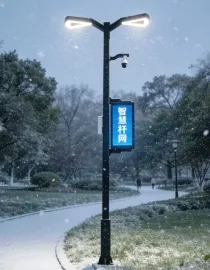
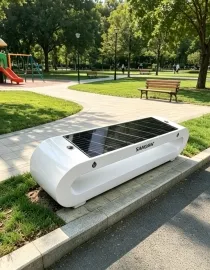
The project adopted a combination of 6‑meter smart solar street lights and multifunctional solar benches customized by Hangzhou Sanqian Smart City Technology Co., Ltd.
-
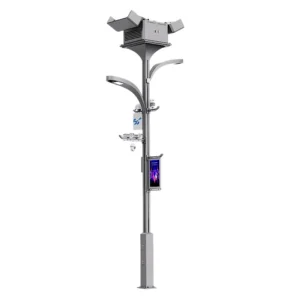
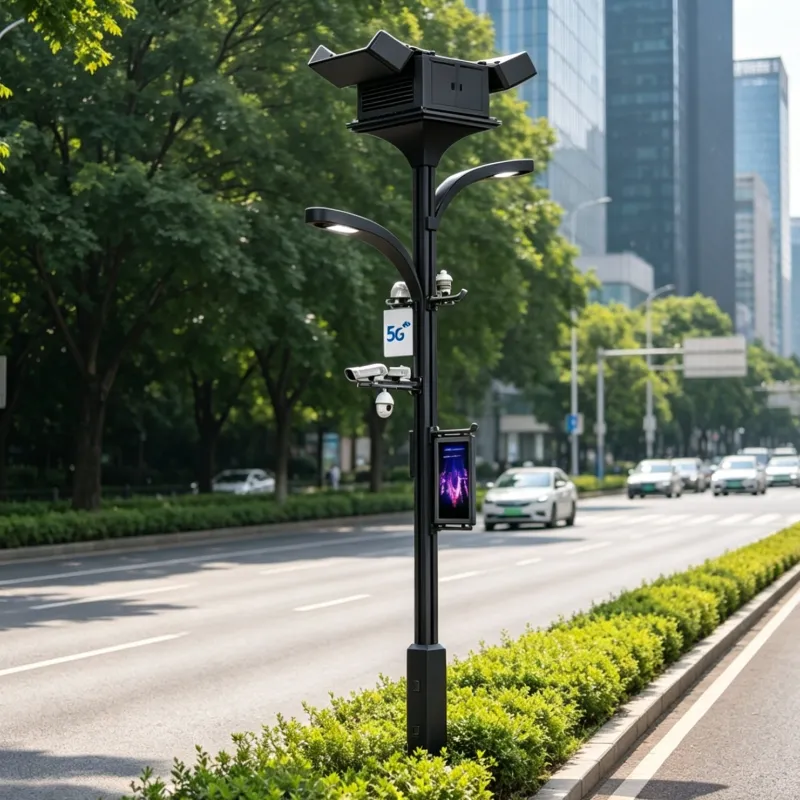
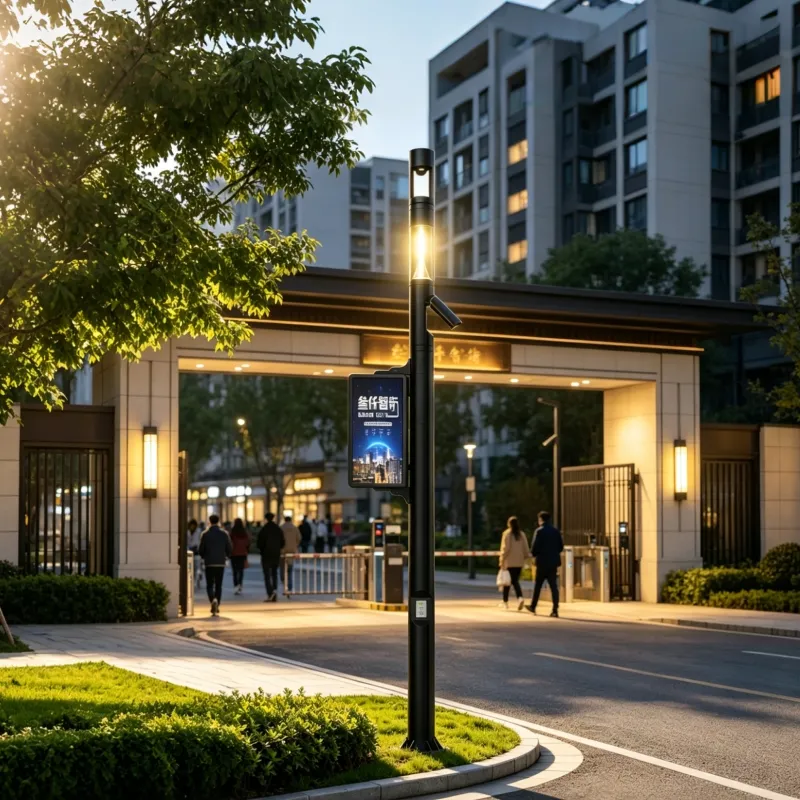
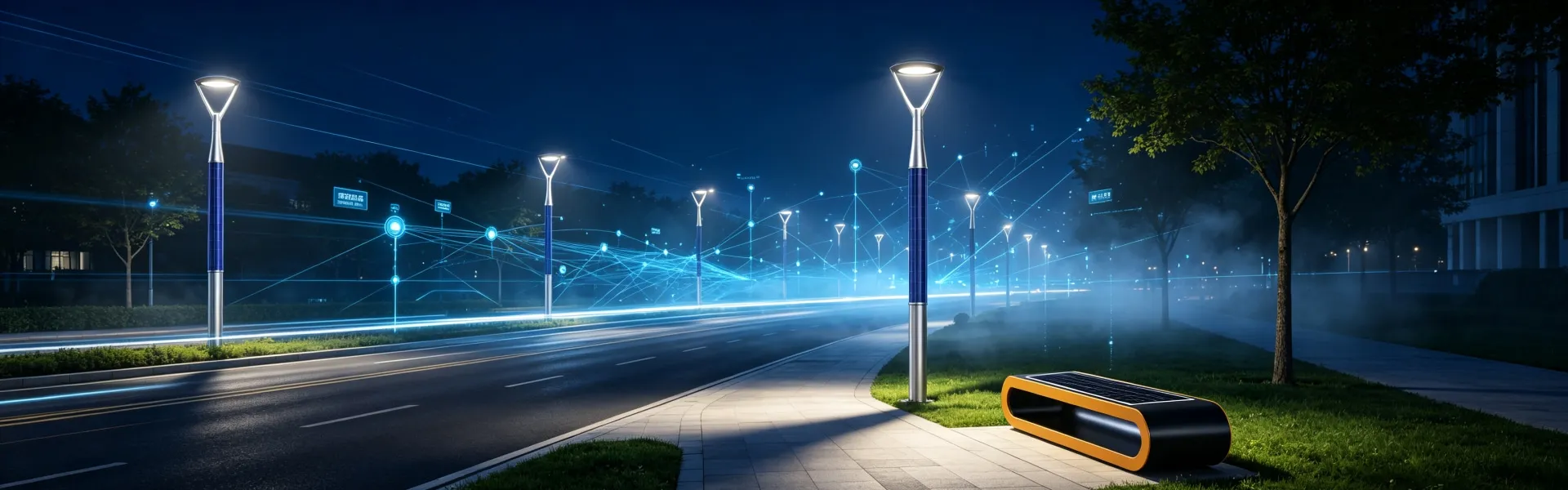
Smart solar street lights: Equipped with high‑efficiency monocrystalline silicon photovoltaic panels (120 W) paired with 80 Ah lithium iron phosphate batteries, supporting continuous operation for 7 rainy/cloudy days. The LED light source has a color temperature of 3000 K and an optimized light distribution curve to avoid glare, meeting the CJJ 45‑2015 road lighting standard. Built‑in 4G communication modules and the self‑developed “Huiguang” management platform enable remote dimming, fault alarming, and energy consumption statistics.
-
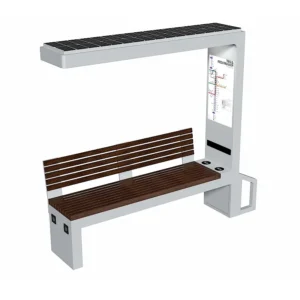
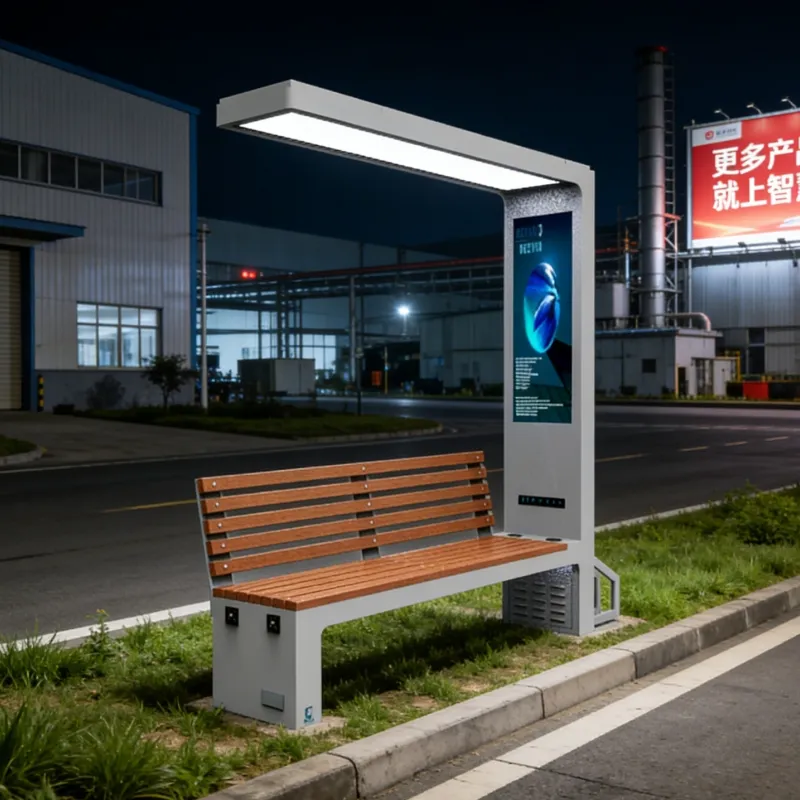
Smart solar benches: Constructed with high‑strength aluminum alloy and finished with wood‑grain transfer printing to harmonize with the natural environment. The top integrates a 50 W photovoltaic panel to power USB charging ports, Bluetooth speakers, and nighttime ambient lighting. Some locations are equipped with small environmental sensors to monitor temperature, humidity, and PM2.5 in real time, displaying the data to visitors via QR codes. All devices have an IP65 protection rating and a wind resistance level of 10. In response to the high ultraviolet radiation, large temperature differences, and frequent sandstorms typical of northwest China, key components have passed accelerated aging and salt spray corrosion tests.
III. Operation Status and Maintenance Performance
The first batch of installations was completed in September 2023, covering the riverside greenway, civic square, and the entrances to two 4A‑level scenic areas. A total of 120 smart street lights and 60 solar benches were deployed. After going online, the system was connected to the local urban management smart platform for unified monitoring.
As of June 2025, the average equipment online rate reached 98.7%. Only 3 street lights triggered low‑battery alarms due to temporary shading of the photovoltaic panels by extreme sandstorms. After remote notification, cleaning staff promptly cleared the panels and restored normal operation. The battery degradation rate was controlled within 5% per year, significantly better than the industry average. The USB ports on all benches were used more than 200 times per day on average, making them highly interactive nodes for citizens and tourists.
IV. User Feedback: From “Usable” to “Willing to Use”
Local residents generally reported: “We used to be afraid to walk along the river at night, but now the lights are bright and there are places to sit. We feel much safer and more comfortable.” An elderly person who frequently exercises on the greenway said: “The bench has a charging port, so I don’t worry if my phone runs out of battery. I can even listen to some opera – it’s very thoughtful.”
Park management staff noted that the smart benches significantly extended visitor stay times, especially during evening peak viewing hours, with bench occupancy rates exceeding 90%. The ability to access environmental data via QR code also enhanced visitors’ perception and appreciation of “ecotourism.”
V. Economic and Social Benefits
Economic benefits: The total project investment was approximately RMB 1.8 million, saving about RMB 450,000 in cable laying costs compared to traditional grid‑connected street lights plus ordinary benches. Based on current electricity prices, annual electricity savings are about RMB 72,000, resulting in a nearly 30% reduction in total lifecycle costs over 10 years.
Social benefits are even more significant:
-
Increased nighttime vitality of public spaces, promoting fitness and community interaction.
-
Reduced carbon emissions, equivalent to planting about 1,200 trees annually.
-
Created a “zero‑carbon demonstration section,” supporting local governments in applying for green and low‑carbon pilot projects.
-
Provided a replicable off‑grid smart facility model for western China, promoting equitable access to public services between urban and rural areas.
Conclusion: Let Sunshine Truly Serve the People
The practice in Gansu Province demonstrates that smart solar infrastructure is not a technological showpiece but a pragmatic innovation rooted in local resource endowments and responding to genuine public needs. It transforms the most abundant sunshine into the warmest public care. Hangzhou Sanqian Smart City Technology Co., Ltd., with its deep understanding of the western environment, fully self‑developed technology system, and reliable delivery capabilities, has become a trusted green infrastructure partner for many local governments.
If your region is planning similar projects, or if you need customized solutions tailored to arid, cold, or high‑sunshine climates, feel free to engage in in‑depth discussions with Sanqian Intelligence. Because a truly smart city is not found on a screen, but in every corner where people are willing to stop, rest, and converse.
Contact Information:
Hangzhou Sanqian Smart City Technology Co., Ltd.
Address: Tangqi Industrial Park, Linping District, Hangzhou, China
Tel: 0571-86099600
Email: hzsqzhcs@163.com
Website:www.smartstreetfurniture.com