Smart light poles are becoming a “standard feature” in new residential communities. They do more than just provide lighting—they also help property management reduce costs, enhance security, and increase convenience for residents. This article explains the real value and practical outcomes of installing smart light poles in residential communities.
In new residential communities, traditional light poles only provide lighting. But as people’s demands for living quality, safety, and intelligence continue to rise, a light pole that only emits light is no longer sufficient. Smart light poles are rapidly replacing traditional ones, becoming the “nerve endings” of smart communities. They not only light up the way home but also integrate security, environmental monitoring, communication, and resident services.
So why exactly should new residential communities install smart light poles? What tangible benefits do they bring? This article provides detailed answers from three perspectives: developers, property management, and residents.
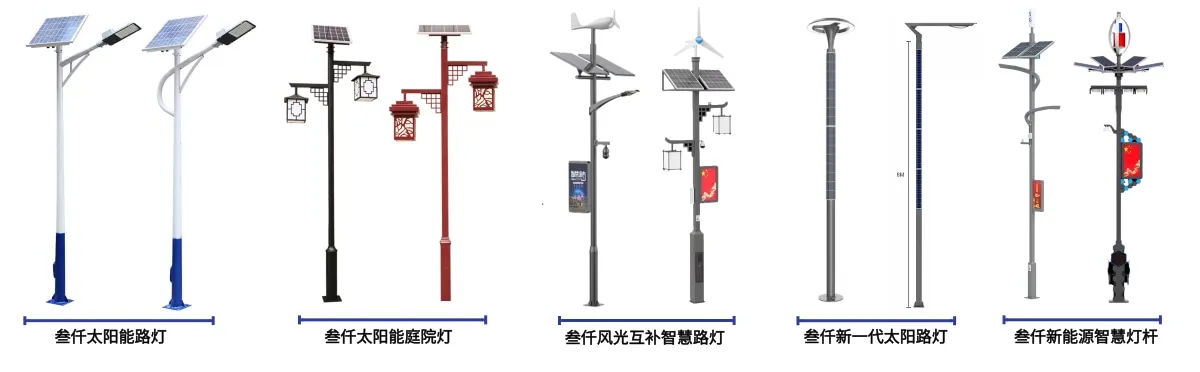
I. Four Pain Points of Traditional Community Light Poles
Before understanding the value of smart light poles, let’s first recognize the limitations of traditional poles:
-
Single function: They only provide lighting and cannot meet modern needs such as security monitoring, emergency assistance, or information dissemination.
-
High energy consumption and difficult maintenance: Ordinary sodium lamps or LED lights lack intelligent control, often staying “fully bright all night,” and faults require manual inspection.
-
Proliferation of poles: Monitoring poles, light poles, sign poles, broadcast poles… too many poles in the community are unsightly and waste land and pipeline resources.
-
Data silos: Lighting, security, parking, and other systems operate independently without integration, leading to low property management efficiency.
These pain points directly result in: poor resident experience, high property costs, and an inability to enhance the community’s grade. Smart light poles were created precisely to solve these problems.
II. Core Functions of Smart Light Poles in New Residential Communities
A smart light pole is not a simple combination of “lamp + camera,” but a modular, scalable intelligent terminal. In new residential communities, it typically integrates the following functions:
-
Smart lighting: Automatically adjusts brightness based on time period and pedestrian flow; can dim to 30% brightness late at night and brighten when someone approaches. Energy savings can exceed 60%.
-
High-definition video surveillance: Covers main roads, children’s play areas, garbage collection points, and other key areas, with motion detection and facial recognition capabilities.
-
One-button alarm: An SOS button on the pole allows residents to directly contact the control center in emergencies (e.g., an elderly person falling, a lost child, a fire).
-
Public broadcasting and background music: Plays soft music in the morning and evening; automatically switches to emergency broadcasts in dangerous situations.
-
Environmental monitoring: Displays real‑time temperature, humidity, PM2.5, noise, and other data, which can be linked to ventilation systems.
-
Wireless Wi-Fi: Provides free Wi‑Fi in public areas of the community, enhancing resident convenience.
-
New energy vehicle charging: Some poles are预留 (pre‑wired) with charging interfaces, solving the charging problem for residents without fixed parking spaces.
-
Information display screen: Shows weather forecasts, property notices, waste sorting reminders, etc.
All functions are managed through a unified IoT platform. Property staff can remotely control, view alerts, and generate reports via computer or mobile phone.
III. Five Tangible Benefits of Installing Smart Light Poles in New Communities
Benefit 1: Significant reduction in property operation and maintenance costs
Smart light poles use single‑lamp controllers and intelligent dimming. The energy consumption, operating hours, and fault status of each pole can be remotely monitored. Property staff no longer need to patrol at night to check streetlights; faults trigger automatic alerts. Actual project data show that smart light poles can save 40%–60% on electricity costs compared to traditional poles and reduce inspection labor costs by about 70%.
Benefit 2: A higher level of community security
Traditional surveillance has blind spots, and cameras are often mounted on separate poles. Smart light poles integrate cameras at a height of 5–6 meters, providing a better field of view. With poles densely distributed, there are virtually no blind spots. Combined with the one‑button alarm function, elderly people and children feel safer when moving around the community. One delivered smart community reported that after installing smart light poles, the response time for nighttime incidents was reduced from 15 minutes to 3 minutes.
Benefit 3: Increased property value and sales appeal
For developers, smart light poles are “visible intelligence.” Displaying a pole that integrates lighting, surveillance, Wi‑Fi, and charging in a showroom is far more convincing than simply claiming “we are a smart community.” Many homebuyers, especially young people, are willing to pay 3%–5% more for a sense of technology and security. Smart light poles have become a standard differentiator for some high‑end residential projects.
Benefit 4: Solving the new energy vehicle charging problem
Although new communities reserve conduits for charging piles, many residents do not have fixed parking spaces and cannot install their own chargers. Smart light poles can be equipped with slow‑charging interfaces (up to 7 kW) next to public parking spaces, accessible by card or QR code. This requires no additional land and meets temporary charging needs. Adding a charging function to a light pole costs about 3,000 RMB extra, yet it can serve multiple electric vehicles—extremely cost‑effective.
Benefit 5: Transforming property management from “reactive” to “proactive”
The smart light pole platform collects data on pedestrian flow, area usage, equipment health, and more. Property managers can use this data to optimize cleaning routes, adjust lighting brightness, and replace faulty components in advance. Upgrading from “handling complaints only after residents complain” to “data‑driven proactive service” significantly improves resident satisfaction.
IV. Real‑World Implementation Example (Reference)
A new residential project of 400,000 m² in a second‑tier city planned 280 smart light poles. Configuration: smart lighting + security monitoring + one‑button alarm + broadcasting + Wi‑Fi + environmental monitoring. The total investment was about 280,000 RMB higher than a traditional light pole + monitoring pole solution. However, annual savings of 82,000 RMB on electricity and 120,000 RMB on patrol labor costs mean the incremental investment can be recovered in less than two years. Additionally, the project was rated a “Provincial Smart Community Demonstration Project.” Apartment prices are 5% higher than comparable nearby communities, and the property fee collection rate increased by 12%.
V. Answers to Three Most Common Questions from Developers
Q1: How much more expensive are smart light poles than ordinary ones?
Ordinary community light poles (including lamp, foundation, wiring) cost about 1,500–2,500 RMB each. Smart light poles, depending on features, generally cost 8,000–15,000 RMB each. However, you save on separately installing monitoring poles, broadcast poles, Wi‑Fi equipment, etc. The net incremental cost is about 4,000–8,000 RMB per pole.
Q2: Is maintenance complicated?
Not at all. Smart light poles use a modular design; the lamp head, camera, and sensors can all be replaced individually. The platform pushes fault codes, allowing property electricians to quickly locate problems. Our company provides a 3‑year warranty and remote technical support.
Q3: Do we need to (pre‑lay) many conduits?
Smart light poles require only one main power cable and one fiber optic cable (or 4G/5G wireless backhaul). During the community road construction phase, simply pre‑lay an SC25 conduit, which is almost the same workload as for traditional light poles.
VI. Conclusion
Installing smart light poles in new residential communities is not “following a trend”—it is a rational choice for reducing costs, increasing efficiency, and improving quality.
-
For developers: Adds selling points and increases property value.
-
For property management: Reduces operation and maintenance costs, improves management efficiency.
-
For residents: Provides a safer, more convenient, and more comfortable living environment.
If you are planning a new residential project or a renovation project, consider including smart light poles as a standard feature. They may cost less than you think and deliver more tangible results.